History of the World: Part I
Released on Fri, June 12, 1981
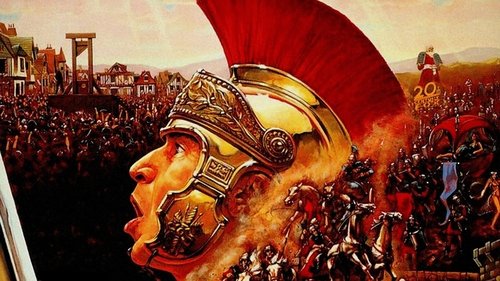
Mel Brooks's "History of the World: Part I" is a comedic journey through pivotal moments in human history, reimagined with Brooks's signature brand of irreverent humor. The film takes a satirical approach to significant events, presenting a world where historical figures are prone to slapstick, absurd dialogue, and musical numbers that mock established narratives. Brooks masterfully blends historical settings with anachronistic jokes, creating a riotous and unpredictable experience for the audience. The film's enduring appeal lies in its willingness to poke fun at the past without taking itself too seriously, turning grand historical tales into laugh-out-loud comedic skits.
The movie doesn't shy away from tackling sensitive or well-respected historical periods, turning them on their head for comedic effect. From the Stone Age to the French Revolution, no era is safe from Brooks's playful mockery. The Roman Empire, typically depicted as a symbol of grandeur and power, is portrayed as a playground for excess, filled with eccentric emperors and over-the-top spectacles. Similarly, the French Revolution, often seen as a pivotal moment in the fight for liberty, is re-imagined as a chaotic farce where revolutionaries are more interested in silly antics than serious political change.
Even the Spanish Inquisition, a dark chapter in history marked by religious persecution and brutality, is given the Brooks treatment. The film transforms the Inquisition into a lavish, synchronized swimming extravaganza, complete with musical numbers and outrageous costumes. This bold decision to satirize such a sensitive topic showcases Brooks's daring approach to comedy, unafraid to challenge societal norms and expectations.
 The overarching theme of "History of the World: Part I" can be described as a relentless comedic assault on the past, showing that no matter how revered or important a historical event may be, it's not immune to laughter. Brooks dismantles the traditional, respectful approach to history and replaces it with a boisterous, often crude, but always entertaining spectacle. This irreverence allows the film to tap into the absurdity of human nature, exposing the flaws and contradictions that have always been present throughout history.
The film's core premise revolves around demonstrating that all aspects of history are fair game for satire. Brooks's intention isn't to offer a historically accurate account but rather to use history as a canvas for his comedic vision. He takes the untouchable, the sacred, and the serious, and transforms them into something completely hilarious and unexpected. Through witty dialogue, physical comedy, and memorable musical numbers, "History of the World: Part I" leaves audiences questioning the very nature of historical narratives.
Ultimately, "History of the World: Part I" is a testament to the power of comedy to challenge and subvert established notions. The film's willingness to mock everything and everyone, from emperors to revolutionaries, is precisely what makes it so memorable and enduring. Brooks's unique brand of humor reminds us that laughter can be a powerful tool for understanding the past, even if it means poking fun at its most revered moments.

 Dom DeLuise
as Emperor Nero

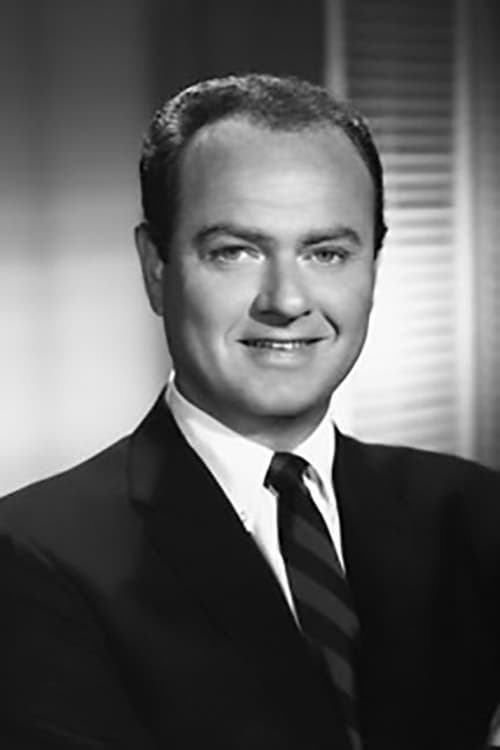 Harvey Korman
as Count de Monet
 Cloris Leachman
as Madame Defarge
 Ron Carey
as Swiftus
 Gregory Hines
as Josephus
 Pamela Stephenson
as Mademoiselle Rimbaud