One Million Years B.C.
Released on Thu, November 24, 1966
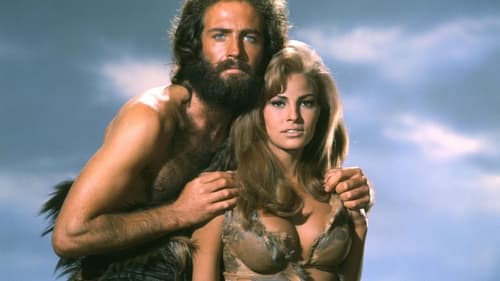
"One Million Years B.C." throws viewers back to a prehistoric era where the Earth is still a volatile, untamed landscape. This is not a gentle world; it's a place of constant challenge, where mere survival is a daily victory. The primitive inhabitants of this era are driven by the basic need to exist, constantly battling against the natural world and each other.
These early humans are depicted as acting on instinct, their lives dictated by the need for food, shelter, and defense. They face a hostile environment filled with colossal prehistoric creatures, making every hunt a life-or-death gamble. Adding to the danger is the constant conflict between different tribes, each vying for dominance and control over scarce resources.
The movie's plot hinges on the forbidden romance that blossoms between a man and a woman from opposing tribes. This love affair challenges the deeply ingrained customs and traditions of both groups. Their connection becomes a catalyst for change, disrupting the established order and forcing both tribes to confront their prejudices and ingrained hatreds.
The central theme revolves around the tribes' relentless pursuit of power and control. The movie portrays this primal struggle as a key step in humanity's long and arduous journey towards civilization. This concept implies that the constant conflict and the overcoming of ingrained prejudices are part of the process of societal growth.
The narrative showcases how the protagonists' budding romance breaks down barriers that have long divided their communities. This love story becomes a symbol of hope, highlighting the potential for cooperation and understanding even in the face of deeply rooted animosity. It showcases that humanity may not be doomed to repeat its mistakes.
"One Million Years B.C." ultimately depicts a pivotal moment in human history. It suggests that through overcoming internal strife and acknowledging shared humanity, these ancient people began the difficult climb towards a more civilized existence. The story, however fictionalized, serves as a symbolic illustration of the challenges and triumphs that shaped the course of human development.

 John Richardson
as Tumak
 Percy Herbert
as Sakana
 Robert Brown
as Akhoba
 Martine Beswick
as Nupondi
 Jean Wladon
as Ahot
 Lisa Thomas
as Sura
 Yvonne Horner
as Ullah