Tănase Scatiu
Released on Mon, October 25, 1976
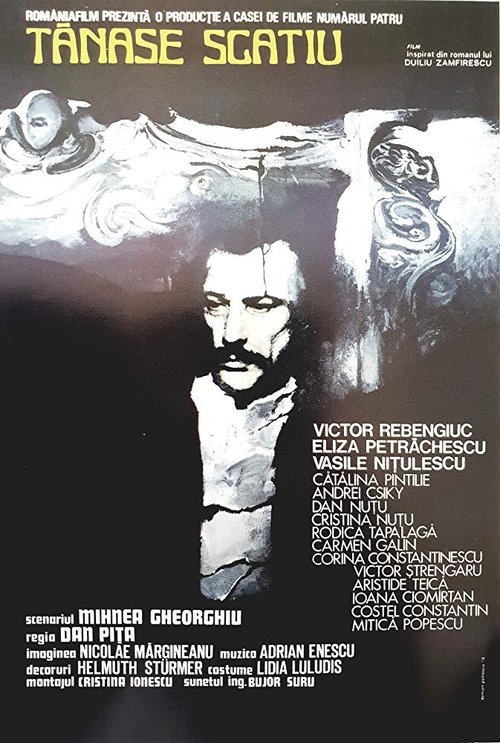
'Tănase Scatiu' is a Romanian historical drama that meticulously portrays the turbulent social landscape of 19th century Wallachia, a region that would eventually become part of modern-day Romania. The film centers on the titular character, Tănase Scatiu, and his relentless pursuit of wealth and social status. It's a story steeped in political intrigue, romantic entanglements, and the stark realities of class divisions within the society. The director, Dan Pița, captures the essence of the era, showcasing both the opulent lifestyle of the boyars (the land-owning aristocracy) and the hardships faced by the peasantry.
At its core, the narrative meticulously charts the trajectory of Tănase Scatiu, a character whose ambitions know no bounds. The film documents his ascent through the ranks of Wallachian society, highlighting his cunning, resourcefulness, and, most importantly, his willingness to exploit any opportunity that comes his way. He embodies the spirit of the ambitious, using whatever means necessary to climb the social ladder, often at the expense of others. His motivations are fueled by a desire for power and recognition in a world where lineage and wealth dictated one's position.
The movie vividly depicts Scatiu's unscrupulous tactics, showcasing his ability to manipulate situations and people to further his own agenda. He deftly navigates the complex web of political alliances and social expectations, using his charm and wit to ingratiate himself with influential figures. He is a master of deception, presenting a facade of respectability while secretly plotting his next move. His behavior is a reflection of the corrupt and often morally bankrupt nature of the society he inhabits.
However, 'Tănase Scatiu' is not just a story about rise; it also serves as a cautionary tale about the pitfalls of unchecked ambition. The film masterfully portrays the eventual downfall of Scatiu, demonstrating that his relentless pursuit of power ultimately leads to his ruin. He becomes increasingly isolated and consumed by his own machinations, losing sight of the human cost of his actions. The very qualities that propelled him to success ultimately contribute to his undoing.
The film subtly explores the changing political climate of the time, highlighting the growing unrest among the peasantry and the challenges to the established order. Scatiu's actions inadvertently contribute to the destabilization of the society he so desperately seeks to control. He fails to recognize the shifting tides of history and the growing discontent of the oppressed, ultimately leading to his demise. His story becomes a symbol of the fragility of power and the inevitable consequences of greed and corruption.
Therefore, the essence of the film revolves around observing the journey of Tănase Scatiu, a member of the 19th-century Wallachian aristocracy, as he both prospers and ultimately crumbles due to his own actions. The plot is about his advancement and subsequent collapse.

 Eliza Petrăchescu
as Profira, Tănase's mother
 Vasile Nițulescu
as Dinu
Andrei Pintilie
as Sașa
 András Csiky
as Matei
 Dan Nuțu
as Mihai
Christina Nuțu
as Tincuța
 Rodica Tapalagă
as Aglaia