Vifornița
Released on Mon, November 19, 1973
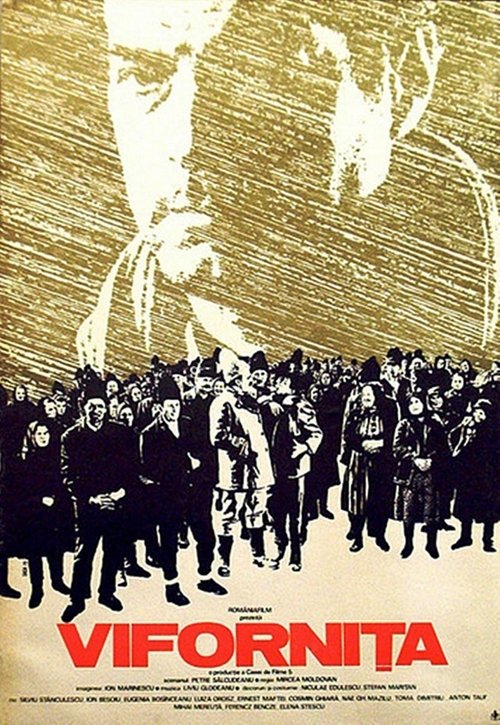
"Vifornița," released in 1961 and directed by Mircea Drăgan, presents a powerful, if ultimately state-sanctioned, narrative about the collectivization of agriculture in Romania during the 1960s. The film paints a picture of a rural community grappling with the monumental shift from individual land ownership to a collective agricultural system. The central theme revolves around the inherent conflict between deeply rooted traditions and the ambitious goals of the socialist regime.
The film focuses on the challenging task of persuading independent farmers, deeply attached to their land and skeptical of communal efforts, to embrace the concept of joining collective farms. The existing system, built on generations of personal cultivation and a strong connection to inherited property, is portrayed as a barrier to progress. This traditional mindset is depicted as hindering modernization and the overall advancement of the rural economy, requiring significant ideological re-education and, at times, forceful persuasion.
The communist party activists, depicted as dedicated and selfless, face considerable resistance in their attempts to convince the peasants of the benefits of cooperative farming. The farmers, suspicious of the new system and fearful of losing their autonomy and the fruits of their labor, cling to their individual plots. This resistance stems from a deep-seated distrust of centralized power and a preference for the familiar routines of their agricultural practices.
The movie showcases the methods used to overcome this resistance. Activists engage in lengthy debates and public gatherings, trying to demonstrate the advantages of collective farming, such as increased efficiency and access to modern machinery. Promises of a better future, with improved living standards and greater prosperity, are frequently made. However, the undercurrent of coercion and the pressure to conform to the party line are also subtly implied within the storyline.
"Vifornița" portrays the eventual success of the collectivization effort, showing how, through persistent persuasion and the demonstration of tangible benefits, the peasants gradually come to accept the new system. The film depicts the transformation of the village, symbolizing the triumph of socialist ideals and the forging of a modern, efficient agricultural sector. The collective farm is presented as a symbol of progress, uniting the community and fostering a spirit of collaboration.
Despite its propagandistic intent, "Vifornița" offers a glimpse into the societal upheaval and the human drama that accompanied the implementation of communist policies in rural Romania. While portraying the collectivization as a positive development, the film implicitly acknowledges the anxieties, uncertainties, and conflicts that characterized this transformative period in the nation's history, making it a valuable, though biased, document of the era.


 Eugenia Bosânceanu
as Paraschiva
 Nae Mazilu
as Deheleanu
 Lujza Orosz
as Rafira
Cosmin Ghiara
as Mircea
 Anton Tauf
as Cismaș